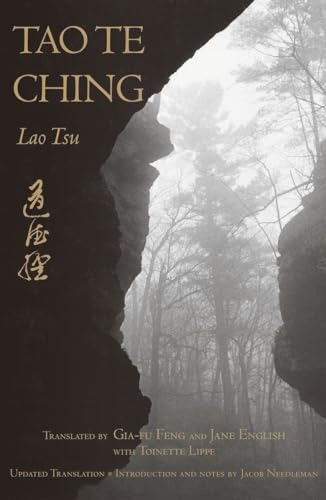
道德經 (Dao De Jing / Tao Te Ching): A New English Version
by Lao Tzu, Gia-Fu Feng, Jane English, Toinette Lippe, Jacob Needleman
About this book
Publication Details
- Publisher
- HarperCollins
- Published
- 1989
- Pages
- 156
- ISBN
- 9780060778071
- Language
- en
- Editions
- 78
About Lao Tzu
Laozi (Chinese: 老子; pinyin: Lǎozǐ; Wade–Giles: Laosi; also Lao Tse, Lao Tu, Lao-Tzu, Lao-Tsu, Laotze, Lao Zi, Laocius, and other variations) was a mystic philosopher of ancient China, and is a central figure in Taoism (also spelled "Daoism"). Laozi literally means "old master", and is generally considered honorific. Laozi is revered as a deity in most religious forms of Taoism. Taishang Laojun is title for Laozi in the Taoist religion, which refers to him as "One of the Three Pure Ones". According to Chinese tradition, Laozi lived in the 6th century BC. Historians variously contend that Laozi is a synthesis of multiple historical figures, that he is a mythical figure, or that he actually lived in the 4th century BC, concurrent with the Hundred Schools of Thought and Warring States Period. A central figure in Chinese culture, both nobility and common people claim Laozi in their lineage. Throughout history, Laozi's work has been embraced by various anti-authoritarian movements. **Source**: [Laozi](https://en.wikipedia.org/wiki/Laozi) on Wikipedia.
More by Lao Tzu


Track your reading journey with BookOwl