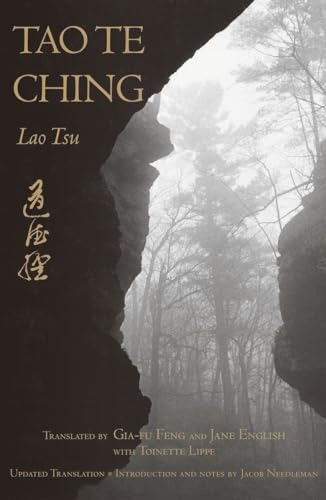
Tao Te Ching
by Lao Tzu, Gia-Fu Feng, Jane English, Toinette Lippe, Jacob Needleman
4.1
(330 ratings)156 pages1988HarperCollinsISBN 9780060160012
ClassicsPhilosophyReligionBody Mind & SpiritPhilosophyGeneral ChineseTaoismPhilosophyfast-pacedfast-pacedPhilosophyPoetryLiteratureFictionNonfictionShelf: 05 Meaning Philosophy & World-Model CalibrationReligion / SpiritualityClassicsLiving Room — Lit
informativereflectiveinspiringfastreflectiveInspiringreflectiveinspiringemotionalreflectivefastinformativeinspiringreflectiveslowchallenginginformativeinspiringreflective
About this book
The Dao De Jing (traditional Chinese: 道德經; simplified Chinese: 道德经) or Laozi is a Chinese classic text and foundational work of Taoism traditionally credited to the sage Laozi, although the text's authorship and date of composition and compilation are debated. The oldest excavated portion dates to the late 4th century BCE.
The Dao De Jing is central to both philosophical and religious Daoism, and has been highly influential to Chinese philosophy and religious practice in general. It is generally taken as preceding the Zhuangzi, the other core Daoist text. Terminology originating within the text has been reinterpreted and elaborated upon by Legalist thinkers, Confucianists, and particularly Chinese Buddhists, introduced to China significantly after the initial solidification of Taoist thought. It is one of the most translated texts in world literature.
Publication Details
- Publisher
- HarperCollins
- Published
- 1988
- Pages
- 156
- ISBN
- 9780060160012
- Language
- en
More by Lao Tzu

Track your reading journey with BookOwl