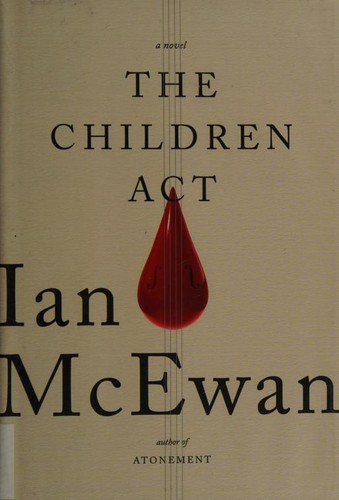
About this book
From the Booker prize–winning, bestselling author of Atonement and Saturday, a genre-bending new novel full of secrets and surprises; an immersive exploration, across time and history, of what can ever be truly known.
2014: At a dinner for close friends and colleagues, renowned poet Francis Blundy honors his wife’s birthday by reading aloud a new poem dedicated to her, ‘A Corona for Vivien’. Much wine is drunk as the guests listen, and a delicious meal consumed. Little does anyone gathered around the candlelit table know that for generations to come people will speculate about the message of this poem, a copy of which has never been found, and which remains an enduring mystery.
2119: Just over one hundred years in the future, much of the western world has been submerged by rising seas following a catastrophic nuclear accident. Those who survive are haunted by the richness of the world that has been lost. In the water-logged south of what used to be England, Thomas Metcalfe, a lonely scholar and researcher, longs for the early twenty-first century as he chases the ghost of one poem, ‘A Corona for Vivian’. How wild and full of risk their lives were, thinks Thomas, as he pores over the archives of that distant era, captivated by the freedoms and possibilities of human life at its zenith. When he stumbles across a clue that may lead to the elusive poem’s discovery, a story is revealed of entangled loves and a brutal crime that destroy his assumptions about people he thought he knew intimately well.
What We Can Know is a masterpiece, a fictional tour de force, a love story about both people and the words they leave behind, a literary detective story which reclaims the present from our sense of looming catastrophe and imagines a future world where all is not quite lost.
About Ian McEwan
Ian Russell McEwan (born 21 June 1948) is a British novelist and screenwriter. He began his career writing sparse, Gothic short stories. His first two novels, *The Cement Garden* (1978) and The *Comfort of Strangers* (1981), earned him the nickname "Ian Macabre". These were followed by three novels of some success in the late 1980s and early 1990s. His 1997 novel *Enduring Love* was adapted into a film of the same name. He won the Booker Prize with *Amsterdam* (1998). He was awarded the 1999 Shakespeare Prize. His next novel, *Atonement* (2001), garnered acclaim and was adapted into an Oscar-winning film. He received the 2011 Jerusalem Prize. His later novels have included *The Children Act, Nutshell, Machines Like Me* and *What We Can Know.*
Track your reading journey with BookOwl