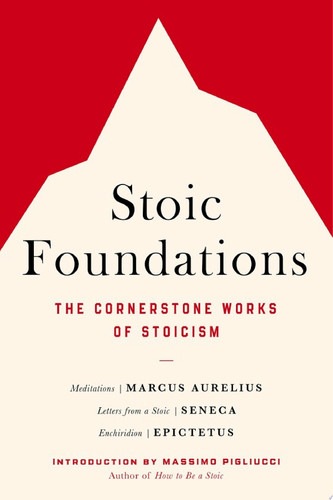
Stoic Foundations
by Marcus Aurelius, Seneca, Epictetus, Massimo Pigliucci
About this book
Publication Details
- Publisher
- Hachette
- Published
- 2023
- Pages
- 416
- ISBN
- 9780306834752
- Language
- en
About Marcus Aurelius
Marcus Aurelius Antoninus was Roman Emperor from 161 to 180. He ruled with Lucius Verus as co-emperor from 161 until Verus' death in 169. He was the last of the "Five Good Emperors", and is also considered one of the most important Stoic philosophers. During his reign, the empire defeated a revitalized Parthian Empire; Aurelius' general Avidius Cassius sacked the capital Ctesiphon in 164. Aurelius fought the Marcomanni, Quadi, and Sarmatians with success during the Marcomannic Wars, but the threat of the Germanic Tribes began to represent a troubling reality for the empire. A revolt in the east led by Avidius Cassius failed to gain momentum and was suppressed immediately. Marcus Aurelius' work Meditations, written in Greek while on campaign between 170 and 180, is still revered as a literary monument to a government of service and duty. It serves as an example of how Aurelius approached the Platonic ideal of a philosopher-king and how he symbolized much of what was best about Roman civilization.
More by Marcus Aurelius

The Emperor's Handbook A New Translation of The Meditations
Marcus Aurelius

The Daily Stoic: 366 Meditations on Wisdom, Perseverance, and the Art of Living: 366 Meditations for Clarity, Effectiveness, and Serenity
Ryan Holiday

Meditations
Marcus Aurelius

Meditations: The Philosophy Classic
Marcus Aurelius

Meditations of Marcus Aurelius
Unknown Author

Meditations of Marcus Aurelius
Unknown Author
Track your reading journey with BookOwl