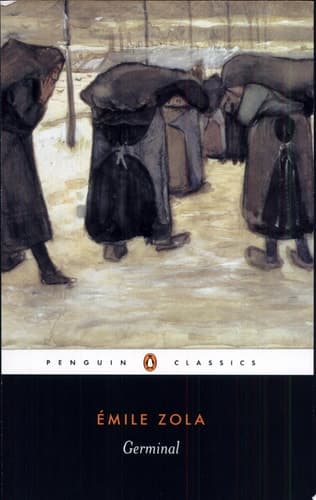
Cover of Thérèse Raquin

Thérèse Raquin

by Unknown Author

227 pages2013Penguin Random HouseISBN 9780099573524

About this book

&quot;Its force of impact, its narrative muscle and its psychological clarity make it still, nearly 150 years on, one of the most shocking books in the canon.&quot; --Julian Barnes <br>TRANSLATED AND INTRODUCED BY ADAM THORPE <br>Mysterious disappearances, domestic cases, noiseless, bloodless snuffings-out... the law can look as deep as it likes, but when the crime itself goes unsuspected... oh yes, there's many a murderer basking in the sun. <br>When Therese Raquin is forced to marry the sickly Camille, she sees a bare life stretching out before her, leading every evening to the same cold bed and every morning to the same empty day. Escape comes in the form of her husband's friend, Laurent, and Therese throws herself headlong into an affair. There seems only one obstacle to their happiness; Camille. They plot to be rid of him. But in destroying Camille they kill the very desire that connects them. First published in 1867, Therese Raquin has lost none of its power to enthral. Adam Thorpe's unflinching translation brings Zola's dark and shocking masterwork to life.

Publication Details

Publisher
Penguin Random House
Published
2013
Pages
227
ISBN
9780099573524
Language
en

About Unknown Author

Emile Zola was a French journalist and novelist known for his series of 20 novels known collectively as Les Rougon-Macquart (1871-93). Zola's style was called literary naturalism; his novels were attacked and even banned for their frankness and sordid detail, and caused quite a bit of controversy in their day. The same traits made him a best-selling author and a star of French literature in his day. In 1898 he then further incurred the wrath of French officials when he published the open letter "J'Accuse," in defense of Alfred Dreyfus, an Army officer who had been convicted of treason. Zola was sentenced to prison for libel, fled to England, and was granted amnesty a few months later. He died in Paris from carbon monoxide poisoning -- the victim of a stopped-up chimney -- a few months before Dreyfus was officially exonerated. [(Source)][1] [1]: http://www.infoplease.com/biography/var/emilezola.html

Track your reading journey with BookOwl