
The Autumn of the Patriarch (P.S.)
by Gabriel García Márquez, Gregory Rabassa
About this book
Publication Details
- Publisher
- Harper Perennial Modern Classics
- Published
- 1973
- Pages
- 284
- ISBN
- 9780060882860
- Language
- en
About Gabriel García Márquez
Gabriel García Márquez is a Colombian novelist, short-story writer, screenwriter and journalist. García Márquez, affectionately known as "Gabo" throughout Latin America, is considered one of the most significant authors of the 20th century. In 1982, he was awarded the Nobel Prize in Literature. He pursued a self-directed education that resulted in his leaving law school for a career in journalism. From early on, he showed no inhibitions in his criticism of Colombian and foreign politics. In 1958, he married Mercedes Barcha; they have two sons, Rodrigo and Gonzalo. He started as a journalist, and has written many acclaimed non-fiction works and short stories, but is best-known for his novels, such as One Hundred Years of Solitude (1967) and Love in the Time of Cholera (1985). His works have achieved significant critical acclaim and widespread commercial success, most notably for popularizing a literary style labeled as magical realism, which uses magical elements and events in otherwise ordinary and realistic situations. Some of his works are set in a fictional village called Macondo, and most of them express the theme of solitude. [1] [1]: http://en.wikipedia.org/wiki/Gabriel_Garc%C3%ADa_M%C3%A1rquez Source and more information: http://en.wikipedia.org/wiki/Gabriel_García_Márquez
More by Gabriel García Márquez

Gabriel García Márquez: One Hundred Years of Solitude
Gabriel Garcia Marquez

One Hundred Years of Solitude Slipcased Ed
Unknown Author

One Hundred Years of Solitude Slipcased Edition
Unknown Author
Cien años de soledad / One Hundred Years of Solitude
Gabriel García Márquez
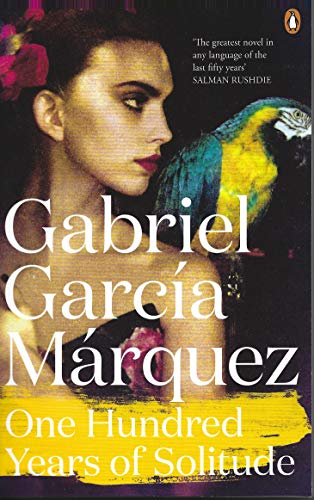
One Hundred Years of Solitude
Gabriel García Márquez
One Hundred Years of Solitude
Gabriel García Márquez
Track your reading journey with BookOwl