
About this book
<p>"What binds us pushes time away" wrote David Oppenheim to his future wife, Amalie Pollak, on March 24, 1905. Oppenheim, classical scholar, collaborator, then critic of Sigmund Freud, and friend and supporter of Alfred Adler, lived through the heights and depths of Vienna's twentieth-century intellectual and cultural history. He perished in obscurity at a Nazi concentration camp in 1943, separated from family and friends, leaving his grandson, the philosopher Peter Singer, without a chance to know him.</p><p>Almost fifty years later Peter Singer set out to explore the life of the grandfather he never knew, and found a scholar whose ideas on ethics and human nature often parallel his own writings. Drawing on a wealth of documents and personal letters, Singer made startling discoveries about his grandparents' early romantic attachments, the basis on which they decide to marry, their professional aspirations, and their differing views of Judaism. An essay that Oppenheim co-wrote with Freud, but which was suppressed because of a bitter split within Freud's psychoanalytical society, leads Singer to explore the difficulties of following one's own ideas in the circles of both Freud and Adler.</p><p>Combining touching family biography with thoughtful reflection on both personal and public questions we face today, <i>Pushing Time Away</i> captures critical moments in Europe's transition from Belle Époque to the Great War and to the rise of Fascism and the coming of World War II. Singer gives us a vivid portrait of Vienna when it was the center of European culture and new ideas, a culture that was both intensely Jewish and distinctly secular. Examining this culture and its fate forces Singer to confront one of the foundations of his own thought: How much can we rely on universal values and human reason?</p>
Publication Details
- Publisher
- Ecco
- Published
- 2003
- Pages
- 272
- ISBN
- 9780060501310
- Language
- en
About Unknown Author
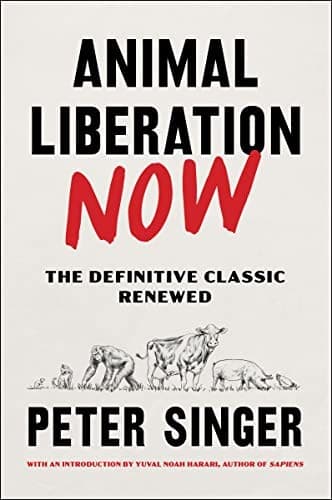
Peter Albert David Singer AC (born 6 July 1946) is an Australian moral philosopher and the Ira W. DeCamp Professor of Bioethics at Princeton University. He specializes in applied ethics and approaches ethical issues from a secular, utilitarian perspective. He is known in particular for his book Animal Liberation (1975), in which he argues in favor of veganism, and his essay "Famine, Affluence, and Morality", in which he argues in favor of donating to help the global poor.
More by Unknown Author


Track your reading journey with BookOwl